S.O.S- Adoptive Dissensus
빛과 소리, 장소 특정적 퍼포먼스, 연극 / 90 분
한강 2009년 3월 29일과 30일 / 국제 다원예술 페스티벌 봄

퍼포먼스 기록 영상
2009
46분 13초
HD 싱글채널사운드비디오 프로젝션

‘너의 현실에 나는 어떻게 살아갈 수 있을까’

퍼포먼스를 준비하며 떠올린 이 질문은 나의 급급한 현실이 사실은 너의 현실로부터 비롯한다는 일종의 원망과 그렇게 서로의 현실에 우리가 깊이 영향 받고 있음을 드러내는 연대감을 동시에 표현하고 있다.
어떻게 관계를 맺고 있는지 어떻게 만나며 어떻게 사라져 갈 것인가...
이 퍼포먼스는 속도가 소멸시키는 기억의 관계, 그것으로부터의 저항, 인간과 도시 속 자연의 관계에 질문을 던진다. 너무 빨리 변하는 환경 속에서 우리의 기억들은 떠밀려 사라지고 삶의 순간들은 살기도 전에 그 기억이 사라질 것을 떠나버릴 것을 늘 준비해야 할 처지가 되었다. 점점 가속화되는 ‘세계화’는 ‘이미 본 것’같고 ‘벌써 사라진 것’ 같은 뒤숭숭한 시공간 감으로 우리를 떠돌게 한다. 그래서 우리는 기록하고 보이지 않는 어둠 속을 마중하며 부딪힌다. 두려워하지 않는다. 친절한 빛은 어둠 덕분에 생색을 낸다. 
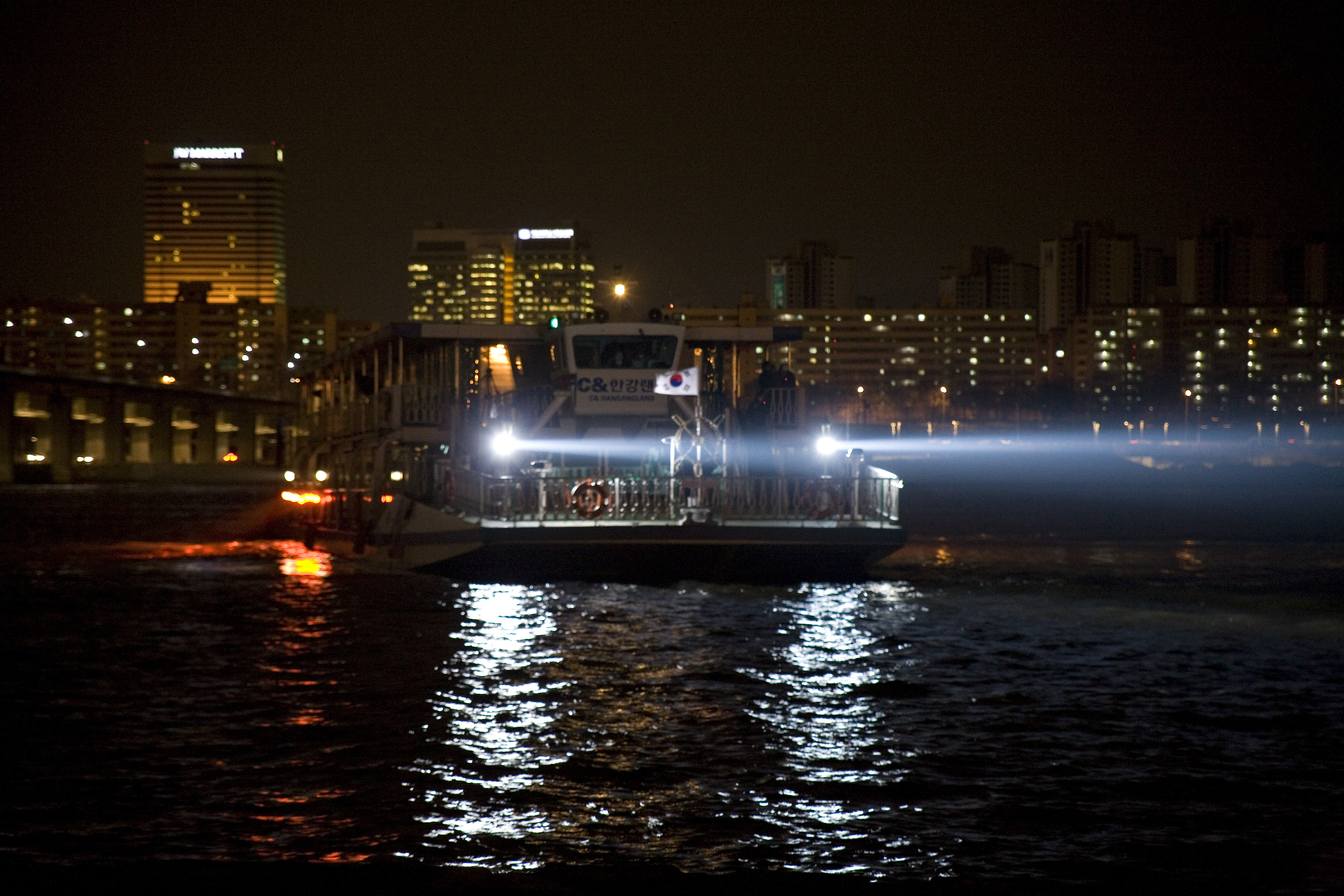
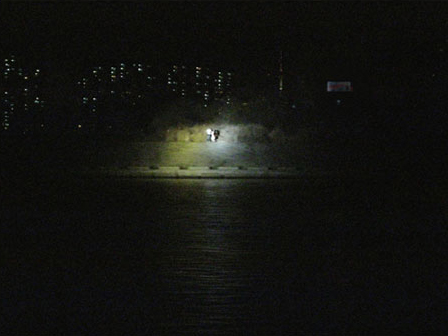
여의도 선착장에서 유람객을 태운 배는 하나(비전향 장기수 출신), 둘(갈 곳 없는 연인들), 여럿(거울시위대)이 연출하는 섬(노들섬), 만(잠수교북단 옆 낚시터), 가장자리(양화대교 옆 절두산 성지 밑 중단된 잠두봉 선착장) 세 지점을 통과하면서 시간과 만남의 궤적을 그린다.
서울이라는 무대에 유람선이라는 배우가 움직이고 관람객은 더 이상 구경꾼이 아니라 그 뱃속으로 들어간다. 삼켜진 관람객은 무대 배우의 ‘젖줄’일 수도 있고 내장일 수 도 있는 한강 줄기를 타고 ‘안’과 ‘밖’ ‘여기’와 ‘저 너머’의 소리를 관계를 통해 보고 듣게 된다. 관람객은 의자에 앉아있지만 이동한다. 빛과 거리, 실시간 사운드와 속도는 유람선이라는 퍼포머의 춤사위이자 추상 언어들이다. 그 가운데 육지와 배를 연결시켜 주는 무전기 교신은 구체언어로서 증언자들을 불러낸다.
그러나 배가 운항되는 동안 보이지 않는 선장의 자조 섞인 목소리는 이 유람선의 흥행과 광고를 목표로 하는 스펙타클의 메시지가 없다. 심지어 스스로를 의심하는 순간에 운항을 머뭇거리며 주저하는 사태까지 발생한다. 그는 스스로를 ‘한강의 선장’이라 생각하며 자신만의 르네상스에 대한 또 하나의 ‘의견’을 피력한다. 소외와 분리가 없는 곳, 잊혀져 가는 사실들을 다시 떠올리고 곱씹는 일이 인간성을 회복하는 일이라고 말한다. 그에게 결국 한강은 소리를 박탈당한 사람들, 어둠 속에 묻혀 있는 사람들이, 권리를 주장하거나 논리를 내세우는 것과 또 다른 방식으로 존재하고 있음을 상기시키는 자연이다. 우리는 한강을 향해 회유와 원망 등 갖가지 감정과 분석, 상징 등을 투사하건만 한강은 “차라리 아무 말도 하지 않으렵니다” “차라리 하지 않으렵니다”라는 말만을 반복한 허먼 멜빌의 소설 주인공 바틀비를 떠올리게 한다. 이 퍼포먼스는 실제 유람선의 인물과 형식 그리고 증언들을 바탕으로 재구성했다.

-

S.O.S. - Adoptive Dissensus

March 29, 30, 2009
Light and Sound Performance / Site Specific Work / Play
90 min.
Han River, Seoul, Korea
International Multidisciplinary Art Festival BOM

Video documentation from performance
HD sound, video projection
2009, ,
1ch. version_46min 13sec. / 3 ch. version_11min.

‘What should I do to live in your life?’

This question, which flashed through my mind while preparing for the performance, shows a feeling of resentment that my life is tied up because of your life and a fact that our lives are deeply influenced by one another.
What should do to make our relationships work? Or how should we come across and fall apart?
This performance throws the question on the relationship of memory faded by speed, resistance from it and the relationship between human beings and nature inside the city. This rapidly changing environment erases our memories and we have to prepare ourselves to let go of the memories without making them. The dizzy process of ‘globalization’ seems as though ‘we have already seen it’ and ‘we have already lost it,’ while wondering about the restless time.

The ferry with audience leaves the Yeoido dock and draws a trace of time and passes the island (Nodle Island), the bay (a fishing spot beside the northern Jamsu Bridge) and the edge (the interupted Jamdu-Bong dock under the sacred Jeoldusan) where a man (a former long-term political prisoner of conscience), a couple (who have nowhere to go) and many (protestors with mirrors) give performances. Now Seoul has become the stage and the boat the actor, and the audience has to play the role of more than audience. The audience will see and hear the sound coming from “in“ and “out” of the boat by sailing down the river which can be “lifeline” or “internal organs” of the actor. Though the audience is sitting they are constantly moving.

Distance and light, and real-time sound and speed are used as the dance moves and the abstract language of the performer, the boat. In midst of the performance, the two-way radio connecting the land and the boat is a concrete language which calls out witnesses. However, the self-mocking voice of an invisible captain has no spectacular message that brings entertainment and publicity to the boat. What is worse, when the captain doubts himself, the ferry hesitates to go on. He regards himself ‘the captain of Han River” and expresses his ”opinion” about what renaissance is really about. He says that to build a place with no neglect or segregation and to remember and ponder upon the truths that are being forgotten is the only way to restore humanity. To him Han River is the nature reminds him that there are still people in the society who demand their rights and answers although they are deprived of their own voice and hiding in the dark. This performance has been reconstructed based on the real character, a captain, and the history of the ferry sailing on the river that runs through the heart of Seoul.